Heavy Equipment Operations Certificate – Level I

Heavy Equipment Operations – Level I

Heavy Equipment Operator Training in Michigan – Start Your New Carrer Today!


Prerequisite for Level II Advanced Training

Start your career as a heavy equipment operator with intensive, hands-on training! Limited to 16 students for maximum seat time.

Here are some real-world examples of students gaining hands-on experience

Program Details

  • Duration: 3 Weeks – Fast-Track to Employment
  • Total Hours: 120 Hours of Instruction
  • Schedule: Monday–Friday, 8:00 AM – 4:30 PM EST
  • Location: North Country Heavy Equipment School, Escanaba, Michigan
  • Class Size: Limited to 16 students per session
  • Student-to-Instructor Ratio: 6:1 maximum – Personalized attention guaranteed

For 25+ years, our motto has been Quality Not Quantity. We focus on real skills, safety, and job readiness so you can enter the construction, excavation, or utility industries confidently.

Equipment You Will Operate

Gain practical experience on industry-standard machines, including:

  • Backhoe (extendahoe)
  • Front-End Loader (articulated)
  • Compact Track Loader
  • Mini Excavator
  • Dump Truck

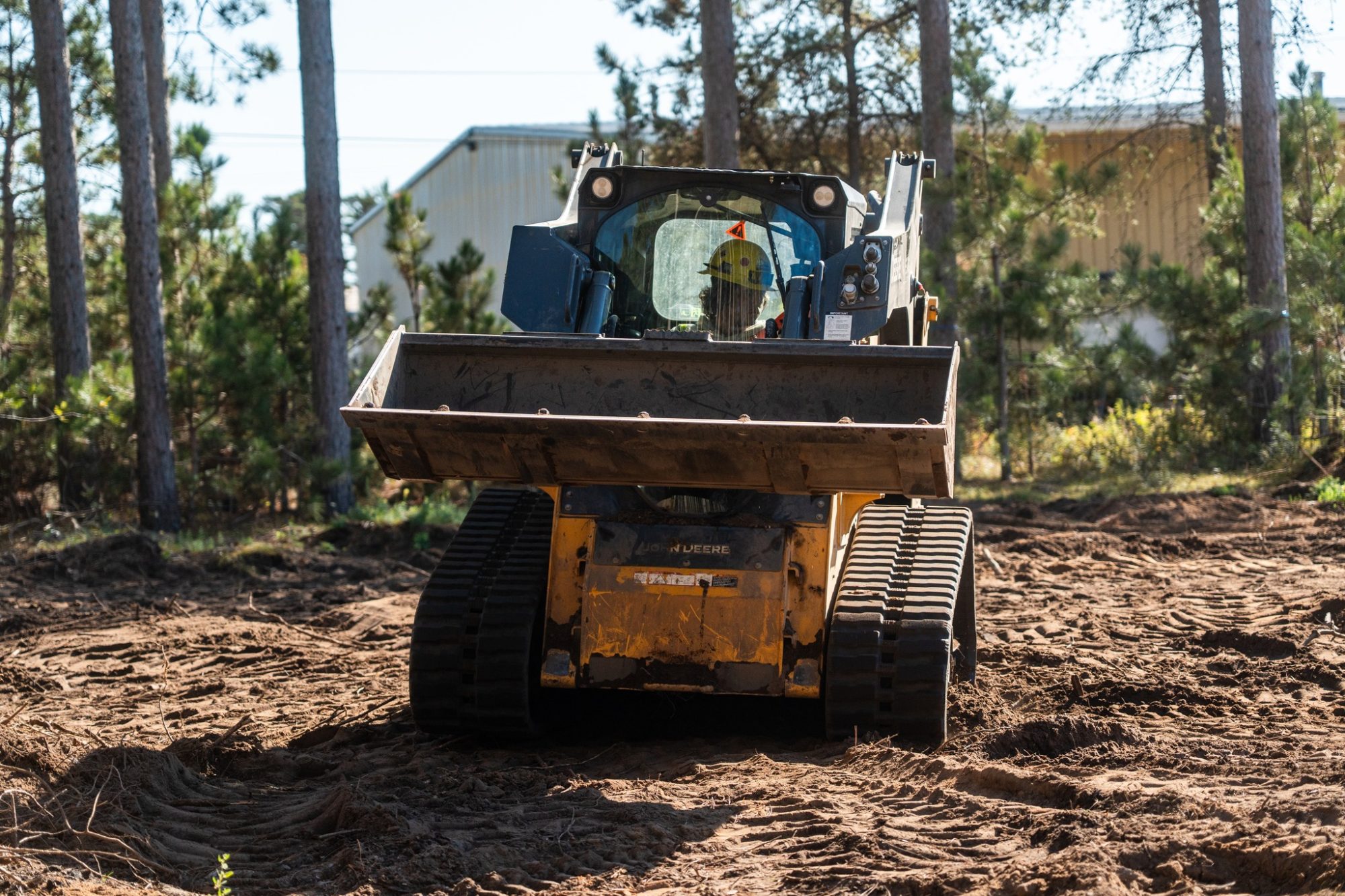
Check out these compact track loaders and mini excavators in action during training:
Course Objectives & Skills Learned

By the end of this entry-level heavy equipment operator course, you will be able to:

  • Safely operate backhoe, front-end loader, track loader, mini excavator, and dump truck
  • Perform daily safety inspections (“walkaround”) and use PPE
  • Complete routine maintenance (greasing, oiling, refueling)
  • Load, unload, and secure equipment with chains & binders
  • Use laser transits, regular transits, and leveling devices
  • Conduct field staking, benchmarking, offsets, and squaring

Included Certifications (boost your resume immediately):

  • Excavation Competent Person Training (ECPT) – Full day on Day 1
  • OSHA-10 Construction Certification
  • NCCER Nationwide Credentials 

Real-World Hands-On Field Projects (90% Field Time)

Put your skills to work on practical construction tasks:

  • Digging, trenching, leveling, grading, and shaping
  • Installing sewer lines, culverts, and pipes
  • Backfilling and compacting soils
  • Setting grades with laser transits and reading stakes
  • Hauling, loading, and unloading materials
  • Excavating ponds and shallow basements

See the hands-on intensity that prepares students for real jobs:

What We Expect From You

  • Attend daily, on time, and substance-free
  • Wear proper work boots, gloves, and weather gear (PPE like hard hats, vests, glasses, and earplugs provided)
  • Actively participate in safety and maintenance routines

Instruction Approach

  • 10% Classroom: Lectures, videos, manuals, handouts (textbook provided Day 1)
  • 90% Field: Actual equipment operation for maximum skill building

Accreditations & Funding Options

Nationally recognized and accessible:

  • NCCER Approved – Earn credentials valid in all 50 states
  • Michigan & Wisconsin Boards of Education Approved
  • U.S. Department of Veterans Affairs – GI Bill® & VA benefits eligible since 2005
  • Workforce Programs: WIOA, TAA, Michigan Works!, Wisconsin Job Center + more
  • Home Builders Association (HBA) Recognized

Ready to launch your career in heavy equipment operations?

Enroll in Level I Today

Classes fill quickly with only 16 spots! Contact Us for upcoming start dates, tuition, and funding assistance.

Employment Opportunities- Direct Pipeline to Employers 

🏗️ Heavy Equipment Operators (Operating Engineers)
IUOE Local 139 (Wisconsin)
  • The Path: Apply directly to the Wisconsin Operating Engineers Apprenticeship Program. It requires 6,000 hours of paid on-the-job training paired with 400 hours of classroom instruction at their 380-acre training center in Coloma, WI.
  • What They Do: Operate bulldozers, excavators, cranes, and scrapers for major road building, excavation, and structural projects across Wisconsin.
  • Pay & Perks: Earn while you learn with excellent starting hourly wages, scheduled incremental raises, and comprehensive union healthcare and pension packages.
IUOE Local 324 (Michigan)
  • The Path: Michigan graduates transition to the IUOE Local 324 Apprenticeship system. Applications require a valid driver’s license, a high school diploma/GED, and specific WorkKeys assessment tests. Hands-on training takes place at their 560-acre heavy equipment site in Howell, MI.
  • What They Do: Direct field placement with signatory union contractors handling heavy civil earthmoving, hoisting, marine construction, and industrial development across Michigan.
Operating Engineers Local 150 (Southeast WI / IL / IN)
  • The Path: Perfect for students located in Southeast Wisconsin (Kenosha, Racine, Walworth counties). Their primary apprenticeship and world-class training facility is located in Wilmington, IL.
  • What They Do: Run excavators, scrapers, concrete pump trucks, and heavy directional drills for massive commercial developments, wind farms, and interstate highway infrastructure.

⚡ Utility & Line Construction
IBEW Local 876 (Michigan & Surrounding Regions)
  • The Path: The operating arm of the International Brotherhood of Electrical Workers. Graduates enter via the ALBAT (Electrical Apprenticeship) program to run equipment specifically around power lines and utility infrastructure.
  • What They Do: Operate digging trucks, trenchers, directional drills, and bucket trucks. Operators support line crews by digging utility paths, setting poles, and clearing civil rights-of-way.
  • Why Choose It: Excellent niche for students who want a mix of heavy equipment operation and high-demand utility infrastructure work.

🚧 Trade Workers & Non-Union Pipelines
Associated Builders and Contractors of WI (ABC – Non-Union)
  • The Path: For students who prefer a non-union route, ABC of Wisconsin sponsors independent apprenticeships and connects graduates directly with hundreds of private contractors across the state.
  • How it Works: Instead of working through a union hall hiring list, students apply directly to ABC-member construction companies for employment and are sponsored through ABC’s approved heavy equipment training curriculum.
LIUNA Local 330 & Laborers’ Union (Wisconsin)
  • The Path: Entering the Laborers’ International Union of North America (LIUNA) gives graduates a versatile entry point into heavy highway and utility construction.
  • What They Do: While Operating Engineers drive the largest machinery, LIUNA members operate support equipment like skid steers, trench compactors, forklifts, and concrete saws, while mastering pipe-laying and grade-checking. This is a very common gateway onto heavy civil jobsites.
Cross-State & Global Pipeline Contractors
  • The Path: Heavy civil pipeline contractors work closely with unions to hire operators directly out of accredited training programs for long-distance utility corridors.
  • What They Do: Operating massive, highly specialized machinery like sidebooms, pipelayers, large track-hoes, and trenching machines.
  • Why Choose It: Traveling pipeline work is demanding and requires travel, but it offers incredible overtime potential and massive weekly per-diem pay for young graduates looking to jumpstart their savings.

🌲 Public Sector & Commercial Infrastructure
County Road Commissions & Highway Departments
  • The Path: Apply directly to individual county websites (e.g., Michigan County Road Commissions or Wisconsin County Highway Departments) or local civil service boards.
  • What They Do: Maintain public infrastructure. In the summer, this involves running graders, loaders, rollers, and dump trucks for asphalt resurfacing. In the winter, it shifts to heavy snow removal and wing-plow operations.
  • Why Choose It: Offers exceptional job stability, predictable schedules, minimal travel, and highly competitive municipal pension benefits. Note: A Commercial Driver’s License (CDL) is almost always mandatory.
The Michigan Infrastructure & Transportation Association (MITA)
  • The Path: MITA is a massive statewide association representing nearly 500 heavy civil construction companies in Michigan.
  • How it Works: Through their workforce initiatives, students can upload resumes or find direct hiring events with major Michigan contractors like Dan’s Excavating, Ajax Paving, or Toebe Construction for both union and non-union field tracks.

🚜 Industrial Quarries & Dealerships
Heavy Civil & Aggregate Quarry Mining
  • The Path: Great Lakes aggregate producers and massive quarries (such as the operations in Rogers City, MI, or inland Wisconsin lime quarries) hire equipment operators directly for stationary, year-round work.
  • What They Do: Operating production-scale machinery like 100-ton haul trucks, massive wheel loaders (e.g., CAT 988 or 992), and heavy rock crushers.
  • Why Choose It: Unlike road construction, quarry work doesn’t stop completely for the winter, offering a stable, local routine without constant travel.
Heavy Equipment Dealerships (CAT, John Deere, Komatsu)
  • The Path: Large regional dealerships like Michigan CAT or FABICK CAT (Wisconsin) look for graduates who understand machine operation to step into field service, equipment setup, and customer delivery roles.
  • What They Do: Testing equipment, moving machines around major yards, demonstrating functions to buyers, or entering specialized heavy technician apprentice tracks.

  • Why Choose It: A perfect corporate-backed path for students who love the machinery but want to lean into the technical, mechanical, or logistics side of the industry.


Frequently Asked Questions

The Heavy Equipment Operator Level I is a three-week course, totaling 120 hours of training. Classes are held Monday through Friday from 8:00 AM to 4:30 PM in the Eastern Time Zone. (Prerequisite to Level II)

During the program, students will receive a combination of classroom instruction and hands-on training with various types of heavy equipment. This schedule ensures that students gain the necessary skills and knowledge to confidently operate machinery in real-world job environments. By the end of the course, students will have completed intensive training designed to prepare them for careers in construction, excavation, roadwork, and other industries that rely on skilled heavy equipment operators.

The Heavy Equipment Operator certification from North Country Heavy Equipment School is valid in all 50 states, not just Michigan. Our training program is approved nationwide, ensuring that graduates are recognized by employers across various industries, including construction, excavation, roadwork, and utilities.

While some states or job sites may have additional requirements—such as specific safety certifications or union membership—the training you receive at North Country Heavy Equipment School meets national standards and prepares you for a successful career as a heavy equipment operator anywhere in the country.

The Heavy Equipment Operator Level I Program is $5,990.

We also offer a variety of financing options for students who qualify, making it easier to get the training you need to start your career as a skilled heavy equipment operator. If you’re interested in financing, we can help you explore the best options available.

Yes, the Heavy Equipment Operator training at North Country Heavy Equipment School covers both Level One and Level Two operations. These comprehensive programs include training on all the necessary skills and techniques for operating various types of heavy equipment, preparing students to meet industry standards.


North Country Heavy Equipment School partners with a few local hotels that offer set monthly rates for students attending the program.

We work with lodging accommodations locally, which offers a monthly rate from $600-$1,200 for students attending the Heavy Equipment Operator course. This makes it convenient for students who need accommodations while they complete their training.

If you need additional options or assistance with housing, feel free to reach out, and we can provide more details.

No, each student will operate their own piece of equipment when it’s their turn. While one student is operating the equipment, their partner will act as a signal person and ground man to ensure safety and assist with communication.

For over 25 years, we’ve found this approach to be incredibly helpful for students. It allows them to learn from each other, as they can offer tips and guidance if one is struggling during our project-based exercises. This hands-on, collaborative learning environment ensures that all students gain confidence and experience with the equipment.

Yes, for students who need transportation to and from the school, North Country Heavy Equipment School offers cars for students to use at no cost. This makes it easier for those who may not have their own transportation to attend the program without any added stress. Let us know if you need to arrange a vehicle, and we’ll be happy to assist!

Lunch is provided on the first day of class. After that, students are encouraged to bring their own lunch. However, our community has many local restaurants and national fast-food chains nearby, so students have plenty of options for lunch throughout the duration of the program.

Some students who are sponsored through their employer may receive payment while attending the program, as their job requires the training. However, for the majority of students, payment is not provided while attending North Country Heavy Equipment School. Most students are responsible for covering the costs of their training and living expenses.

Yes, North Country Heavy Equipment School is proud to accept all VA Benefits to help both new and experienced veterans transition from one career to the next. In addition to regular VA benefits, the school also accepts vocational rehabilitation for veterans who may not have regular benefits remaining. We are committed to supporting veterans in their journey to gain valuable skills for a successful civilian career.

We don’t just dig holes! At North Country Heavy Equipment School, we believe in project-based exercises that provide students with the opportunity to work on real-life projects while learning to operate the various machines. These exercises not only help you gain hands-on experience but also teach you practical skills needed in the industry.

Some of the exercises students will work on include:

  • Culvert installation
  • Road grade and staking
  • Septic system installation
  • Leach fields
  • Basement foundation work
  • Forklift exercises
  • Trenching
  • New construction
  • Pole setting
    And much more!

These projects are designed to give students a well-rounded experience and prepare them for real-world tasks they’ll face as heavy equipment operators.

The average pay for a heavy equipment operator can vary significantly depending on several factors, such as location, experience, the type of equipment operated, and the specific industry.

In the United States, the average annual salary for a heavy equipment operator typically ranges from $50,000 to $100,000. However, this figure can vary depending on the factors mentioned earlier.

  • Experience and Specialized Skills: Operators with more experience or who specialize in certain types of equipment can command higher salaries.
  • Industry Demand: Geographical regions with high demand for heavy equipment operators—like areas with major construction or mining projects—often offer higher pay rates.

For the most accurate and up-to-date salary information, it’s best to consult job market resources, industry associations, or local job listings in your specific area, as salaries can differ from one location to another and from one employer to another.

Click here to see the Heavy Equipment Operator job listings and salary information in your area.

The Benefits of Going to School to Become a Heavy Equipment Operator

In the realm of vocational careers, heavy equipment operation stands as a compelling choice. These skilled professionals play a pivotal role in various industries, from construction and mining to forestry and agriculture. While some individuals learn the ropes through on-the-job training, enrolling in a dedicated heavy equipment operator school offers a multitude of advantages. In this comprehensive article, we will explore the benefits of pursuing formal education in heavy equipment operation, shedding light on the valuable skills, career prospects, and personal growth opportunities it provides.

1. Specialized Training

One of the primary advantages of attending a heavy equipment operator school is the specialized training it offers. These institutions focus exclusively on equipping students with the knowledge and hands-on skills needed to operate heavy machinery safely and efficiently. In contrast, on-the-job training might be more limited in scope and could take longer to cover essential concepts.

2. Safety First

Safety is paramount in the heavy equipment industry. Schools prioritize safety training, ensuring that students understand the risks associated with heavy machinery and how to mitigate them. Learning in a controlled, supervised environment reduces the likelihood of accidents and instills a strong safety mindset from the beginning of one’s career.

3. Diverse Equipment Exposure

Heavy equipment operator schools provide access to a wide range of machinery, including bulldozers, excavators, loaders, and cranes. This exposure allows students to become proficient with various types of equipment, increasing their versatility and job opportunities.

4. Efficient Learning

Structured coursework in a school setting typically leads to more efficient learning. Instructors follow a curriculum that covers essential topics systematically, reducing the chances of knowledge gaps or missed skills. This organized approach accelerates the learning process.

5. Industry-Recognized Certification

Many heavy equipment operator schools offer certification programs. Earning a recognized certification can significantly enhance a graduate’s employability. These certifications validate their competence and adherence to industry standards.

6. Better Job Prospects

With a formal education and industry-recognized certification, graduates often have a competitive edge when seeking employment. Employers prefer candidates with a solid foundation in heavy equipment operation, as it reduces the need for extensive on-the-job training.

7. Higher Earning Potential

Well-trained heavy equipment operators often command higher salaries than those with less formal education. Their proficiency and safety-conscious approach make them valuable assets to employers willing to compensate them accordingly.

8. Career Advancement

Heavy equipment operation is not limited to entry-level positions. Those with formal training can pursue career advancement opportunities, such as becoming equipment supervisors, safety managers, or equipment inspectors. A solid education provides the foundation for such career progression.

9. Enhanced Problem-Solving Skills

Operating heavy machinery requires quick thinking and the ability to solve problems on the spot. Heavy equipment operator schools emphasize critical thinking and troubleshooting skills, preparing students to handle unexpected situations confidently.

10. Increased Confidence

Knowing how to operate heavy equipment safely and effectively boosts an individual’s self-confidence. Graduates from heavy equipment operator schools feel more assured in their abilities, which positively impacts their job performance and overall job satisfaction.

11. Hands-On Experience

Heavy equipment operator programs emphasize practical, hands-on training. This experiential learning approach ensures that students gain real-world skills that are immediately applicable in the field. It also allows them to become familiar with the equipment’s controls, maintenance, and operation techniques.

12. Networking Opportunities

Enrolling in a heavy equipment operator school provides an opportunity to network with peers, instructors, and industry professionals. These connections can prove invaluable for job hunting, mentorship, and staying informed about industry trends.

13. Knowledge of Regulations

Understanding and adhering to industry regulations and safety standards is crucial for heavy equipment operators. Schools ensure that students are well-versed in these regulations, reducing the likelihood of violations that can lead to accidents, fines, or legal issues.

14. Personal Growth

In addition to the technical skills acquired, attending a heavy equipment operator school fosters personal growth. It instills discipline, responsibility, and a strong work ethic. Graduates often develop a sense of pride in their abilities and their contribution to essential industries.

15. Industry Diversity

Heavy equipment operators are in demand across a broad spectrum of industries. This diversity allows individuals to choose an industry that aligns with their interests and values. Whether it’s construction, agriculture, mining, or forestry, there is likely a sector that suits their preferences.

16. Job Stability

Heavy equipment operation is a profession that offers job stability. As long as construction, infrastructure development, and other related industries exist, the need for skilled operators remains constant.

17. Environmental Responsibility

Modern heavy equipment is designed with environmental considerations in mind. Schools teach students about eco-friendly practices, such as efficient fuel usage and minimizing environmental impact, aligning their skills with sustainable industry trends.

18. Union Opportunities

In some regions and industries, heavy equipment operators may have the option to join unions. Union membership often brings additional benefits such as collective bargaining power, job security, and access to healthcare and retirement plans.

19. Personal Satisfaction

Operating heavy equipment can be personally satisfying. The tangible results of your work, such as building structures, creating landscapes, or extracting resources, can be highly rewarding.

20. Pride in Contribution

Heavy equipment operators play an essential role in the development and maintenance of infrastructure. Knowing that your work contributes to the betterment of society can be a source of immense pride and job satisfaction.

Conclusion

Attending a heavy equipment operator school offers a multitude of benefits that extend beyond the acquisition of technical skills. It provides a solid foundation for a rewarding career, with advantages including specialized training, safety consciousness, career opportunities, and personal growth. Whether you are embarking on a new career path or seeking to enhance your existing skills, the decision to enroll in a heavy equipment operator school can prove to be a wise and fulfilling choice. It opens doors to a world of opportunities in industries that rely on the expertise of skilled operators.


Lucas Stears
4 weeks ago
Wonderful school, taught everything you need to know to get started in the trade and helped get your foot in the door.
christian shields
2 months ago
I went through their CDL-A course and their heavy equipment course and I could not have asked for better instructors, they all are 100% in to make sure you succeed
John Hurthibise
2 months ago
I think the course was very well put together, the instructors were very helpful and glad to answer any questions. I enjoyed the course and learned a lot
Karter Hintzman
2 months ago
I highly recommend coming here, I just finished up with the heavy equipment school and the instructors are the best around and you will learn a lot
Craig Dengler
2 months ago
Great experience. The instructors were really helpful. I learned a lot. I would highly recommend to others
Chris Krause
2 months ago
Had lots of fun and worked at playground with community members was amazing. The course was good and it went very fast after done with paper work the first day.
James Frayer
2 months ago
Amazing school great instructors always willing to help any way they can
Owen Duncan
2 months ago
North Country Heavy Equipment School was great. Don, Dennis, Bob and Emil all know what they are doing and are damn good at what they do. Also just great guys in general. Everything was fun and mostly hands on. I recommend this to anyone looking to get into the industry!
Response from the owner:Thank you, Owen! Keep us updated on your adventures!
Trenton Buckholtz
2 months ago
This school was amazing not much class room stuff. Majority hands on the instructors know what they are doing and do everything they can to make you a better operator and help with your future. The best thing about this class was the people by far.
Response from the owner:Thank you for your kind words Trenton! We're so glad you had a such a good experience. 🙂 We love what we do and are proud to help you succeed!
Owen Konsti
2 months ago
Would highly recommend for someone looking to start a career in the field. You won’t find better instructors anywhere.
Response from the owner:Thank you, Owen! We're pretty fond of our instructors too! 🙂
I went here and got my Certificate for level 1. I am definitely going to be back for level 2 at some point. Don, Emil, and Bob are very good at what they do. If your looking into getting your Certificate for Heavy Equipment, I 110% recommend going here! Their all about answering any questions. They want you to have fun while training which is why I chose this place and they definitely live up to their word. For sure go here you won't regret it, and to the Instructors thank you so much for the opportunity and good times!!
Response from the owner:We appreciate your review, Emerson! Thank you. Having fun is important, and we love what we do! 🙂 We'll see you on the CDL side in just a few weeks!
Kyle Aten
2 months ago
I had a great experience at the heavy equipment school. The instructors were amazing and very helpful. It gave me great knowledge and it is a great start if its a career you're interested in. Thank you don, bob, and emil.
Response from the owner:Thank you, Kyle! We love that you had a great experience! Stay in touch!
Gordy Bawks
2 months ago
This class gave me the best starter information on each machine I ran. This is a definite start to success within this industry. Thank you Don, Emil, and Bob for the help.
Photo from customer reviewPhoto from customer review
Response from the owner:Thank you! We love the photos! 🙂
Ashley Jacques
2 months ago
I am thankful for being able to have the opportunity to do this program. It was amazing to work with Don, Bob, Emil and Bill. They were amazing instructors and was willing to answer questions and demonstrate. I would highly recommend this program especially for beginners or someone who has never touched a piece of equipment. The downfall for this program however was that there wasn't enough equipment and yard space to practice due to the extremely large class size. Be prepared for lots of homework (reading textbooks (2), online videos/ modules, paper handouts, etc). Also, lots of online, paper hand written, and performance tests. Honestly, think they should have students purchase the textbooks so they can study prior to the program, it can be overwhelming at times. Otherwise, was a great and fun experience!
Samuel Pelkey
3 months ago
Phenomenal!! Opened so many doors.
Scott
3 months ago
Good instructors and people would recommend for anybody
Juan Caicedo
3 months ago
It met and exceeded my expectations. Bob, Don and Emi are very kind, patient, and willing to teach you everything required and involved in being an operator.
Charles Salo
3 months ago
Class was great would recommend
Nicklas Nelson
3 months ago
I recently completed training at North Country Heavy Equipment School, and it was one of the best decisions I’ve made for my career. The instructors are extremely knowledgeable, patient, and genuinely care about helping students succeed. The hands-on training was outstanding, giving me real-world experience and confidence operating equipment and learning industry skills. The small class sizes allowed for plenty of one-on-one instruction, and the staff created a welcoming environment where everyone felt comfortable learning. Safety was emphasized throughout the program, and the instructors took the time to make sure every student understood both the equipment and the proper procedures.
Amy Rice
3 months ago
Great place to learn about equipment
King Reedy
3 months ago
Instructors are very helpful and professional. Any skill level Operator can attend and learn. Develop and understand safe operating procedures. Complete Osha-10 and NCCER certifications. Would recommend to any and everyone interested in the trade. Had a awesome time and met some good people.
Cylie LaFave
4 months ago
Had a great time and learned lots! It was challenging and extremely educational. With patient and kind instructors who are willing to work with you!!!
Tyler Randoloh
4 months ago
The heavy duty equipment course is definitely a class to take. The instructors Bob, Dennis and Don did such an amazing job at teaching and showing what needs to be done and how things should be done correctly. They take the time to make sure you understand what you’re doing. I couldn’t have asked for a better set of teachers to teach this class. I have learned a lot, and I’ve learned a lot more than what I thought I was going to learn while taking this class. The class is truly hands-on class. I would truly recommend this class to thinking about getting into the heavy equipment field
Wisconsin Wrench
4 months ago
North Country Heavy Equipment school has found some of the best instructors in the field. Don, Bob, and Dennis were all exceptional at conveying not only the knowledge they have but how to use it in real world situations. Safety first always They also have infectious positive attitudes. I would recommend this to anyone looking to expand their skills list.
Dave Zdroik
5 months ago
Highly recommend Bob, Dennis, and Don are great instructors.

Contact Us

Do you have questions? We have answers!

906-789-3123

admissions@ncheschool.com

Contact Us